
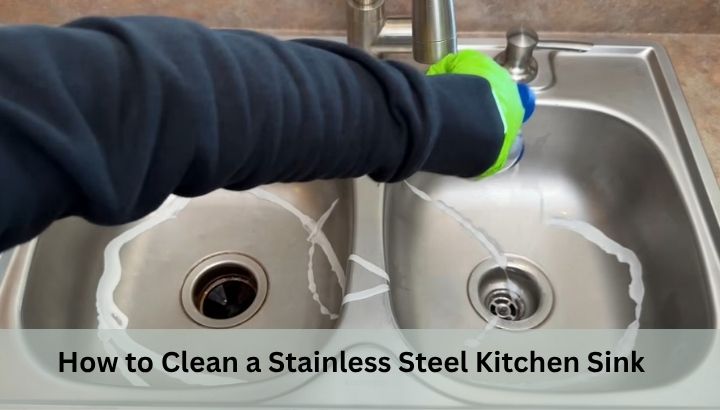
To clean a stainless steel kitchen sink, rinse the basin, apply a small amount of dish soap or baking soda with a soft cloth or sponge, scrub in the direction of the grain, rinse thoroughly, and dry completely with a microfiber cloth to prevent water spots and mineral deposits from forming.
A stainless steel kitchen sink is one of the most durable and widely used fixtures in any kitchen, but it requires consistent and method-specific cleaning to stay looking its best.
Unlike porcelain or composite sinks, stainless steel has a directional grain in the metal surface, reacts poorly to certain chemicals, and shows water spots, fingerprints, and scratches more visibly than most people expect when they first install one.
What Makes Stainless Steel Sinks Different to Clean
Understanding the material itself explains why certain cleaning methods work and others cause lasting damage. Stainless steel is an iron alloy containing at minimum 10.5 percent chromium by mass. The chromium reacts with oxygen in the air to form a thin, invisible chromium oxide layer on the surface called the passive layer. This passive layer is what gives stainless steel its corrosion resistance and its characteristic shine. When this layer is damaged, the underlying iron becomes exposed and rust or staining can develop, even on high-grade steel.
Understanding Stainless Steel Grades in Kitchen Sinks
Most residential kitchen sinks are manufactured from Type 304 stainless steel, which contains 18 percent chromium and 8 percent nickel (often labeled 18/8). This grade is the standard for food-contact applications, offers excellent corrosion resistance, and is found in products from brands like Kraus, Elkay, Blanco, Kohler, and Ruvati. Type 316 stainless steel adds molybdenum to the alloy and is used in marine and commercial environments where chloride exposure is constant, but it is less common in residential kitchen sinks.
The gauge (thickness) of stainless steel in kitchen sinks ranges from 16 to 22, with lower numbers indicating thicker metal. A 16-gauge sink is significantly heavier and more resistant to denting and vibration noise than a 22-gauge model. Gauge does not affect cleaning method, but thicker sinks are more forgiving of accidental abrasion because there is more surface material present.
The Grain Direction and Why It Matters
Stainless steel is finished by brushing the surface in one consistent direction during manufacturing, which creates microscopic parallel grooves in the metal. This directional texture is what gives brushed stainless steel its characteristic satin appearance. Cleaning against the grain (perpendicular to these grooves) pushes debris into the grooves rather than along them, and using abrasive tools across the grain creates new scratches that catch light differently from the surrounding surface, making them highly visible. Always identify the grain direction before scrubbing and clean along it, not across it.
Everyday Cleaning Methods for a Stainless Steel Kitchen Sink
Regular daily or post-use cleaning prevents the buildup that requires more aggressive intervention later. The most effective daily routine takes under three minutes and requires nothing more than basic household supplies.
Basic Daily Cleaning with Dish Soap
Dish soap is the most appropriate everyday cleaner for a stainless steel kitchen sink. Its surfactant formula lifts grease, food residue, and surface grime without disrupting the passive chromium oxide layer. Apply a few drops of dish soap such as Dawn, Seventh Generation, or Palmolive to a soft sponge or microfiber cloth. Wipe the entire basin, walls, and ledge areas in the direction of the grain. Rinse thoroughly with warm water, making sure no soap film remains, and then dry the surface with a clean microfiber cloth rather than leaving it to air dry.
The drying step is the one most people skip, and it is the main reason stainless steel sinks develop white spots and mineral haze. Water evaporating naturally leaves behind dissolved calcium and magnesium minerals (limescale) in a concentrated residue that etches into the surface appearance over time and becomes progressively harder to remove the longer it sits.
Baking Soda Scrub for Routine Deep Cleaning
Baking soda (sodium bicarbonate) is a mild alkaline abrasive that physically lifts surface stains and deodorizes the drain area without scratching the metal. Sprinkle a thin, even layer of baking soda across the wet sink basin. Using a damp sponge or soft cloth, work the baking soda into a paste and scrub in the direction of the grain. Pay extra attention to the area around the drain where food particles and standing water most often leave dark staining. Rinse completely with warm water and dry with a microfiber towel.
This method is safe to use several times per week and is effective on light rust stains, tea and coffee discoloration, and food dye deposits. It also neutralizes sour odors in the drain area without harsh chemicals.
How to Remove Specific Stains from a Stainless Steel Kitchen Sink
Different types of staining require different targeted approaches. Using the wrong method on a specific stain type either fails to remove it or damages the surface in the process.
Removing Water Spots and Mineral Deposits (Limescale)
Limescale and hard water deposits are the most common cosmetic issue with stainless steel kitchen sinks in areas with hard tap water. White or chalky residue forms at the waterline, around the faucet base, and in low-drainage areas of the basin. White vinegar (acetic acid at 5% concentration) is the most effective and safest household remedy for dissolving these mineral deposits.
Soak paper towels in undiluted white vinegar and lay them flat against the affected areas. Let them sit for 15 to 30 minutes to allow the acetic acid time to dissolve the calcium carbonate bonds in the limescale. Remove the paper towels and scrub lightly with a soft cloth in the grain direction. Rinse thoroughly because residual vinegar left on the surface can eventually dull the finish if it dries repeatedly in the same spot. Dry immediately after rinsing.
For heavy, long-standing mineral buildup, products like Bar Keepers Friend (which contains oxalic acid) or Lime-A-Way are more effective than vinegar alone. Apply with a damp sponge, let it dwell for one to two minutes, scrub lightly with the grain, and rinse completely.
Removing Rust Spots and Discoloration
Rust spots on stainless steel sinks are usually surface rust rather than structural corrosion. They typically come from one of three sources: leaving steel wool pads or cast iron cookware sitting wet in the sink (which deposits iron particles that oxidize on the stainless surface), long-term exposure to bleach or chlorine-based cleaners that degrade the passive layer, or leaving salt or acidic food residue in contact with the metal for extended periods.
Bar Keepers Friend cleanser is the most widely recommended and independently tested product for removing rust stains from stainless steel. Its active ingredient, oxalic acid, chemically dissolves iron oxide (rust) without attacking the stainless steel alloy beneath. Apply the powder with a wet sponge, work it into the stain in circular then straight grain-direction strokes, let it dwell for one minute, and rinse completely. CLR (Calcium, Lime, and Rust Remover) is an alternative for more severe rust staining.
For very light surface rust or discoloration, a paste made from cream of tartar and a small amount of hydrogen peroxide can be applied, left for five minutes, and wiped away with the grain.
Removing Grease and Oil Buildup
Heavy cooking grease that accumulates around the drain area and along the sink walls requires a degreaser rather than a standard dish soap application. A small amount of rubbing alcohol (isopropyl alcohol at 70% concentration) applied to a microfiber cloth cuts through oil residue effectively and evaporates cleanly without leaving any film. WD-40 is a counterintuitive but effective tool for both removing grease buildup and adding a temporary protective coating to the metal surface after cleaning. Apply a thin layer, let it sit for one minute, then wipe it away fully with a clean dry cloth. The light petroleum film left behind fills microscopic surface scratches and repels water briefly.
Removing Food Stains and Dark Marks
Dark marks from coffee, tea, wine, tomato sauce, and fruit juices are caused by tannins and organic pigments bonding to the metal surface. A paste of baking soda and hydrogen peroxide applied directly to the stain and left for five to ten minutes lifts most organic food staining effectively. For stubborn marks, Bar Keepers Friend again provides the most reliable result among readily available products. Always scrub with the grain and rinse completely after any paste application.
Cleaning Products Compared: What Works and What to Avoid
Knowing which products are safe for stainless steel is as important as knowing which methods to use. Several common household cleaners cause significant long-term damage to stainless steel when used regularly.
Stainless Steel Sink Cleaning Products Comparison Table
| Product | Active Ingredient | Best Used For | Safe Frequency | Risk if Misused |
|---|---|---|---|---|
| Dish soap (Dawn, Palmolive) | Surfactants | Daily cleaning | Daily | None if rinsed |
| Baking soda | Sodium bicarbonate | Light stains, deodorizing | Several times/week | None on stainless |
| White vinegar | Acetic acid (5%) | Limescale, water spots | Weekly | Dulls finish if left to dry |
| Bar Keepers Friend | Oxalic acid | Rust, mineral deposits, stains | Weekly or as needed | Fine scratches if over-scrubbed |
| CLR | Lactic/gluconic acid | Severe calcium and rust deposits | Monthly | Avoid on colored fittings |
| Rubbing alcohol | Isopropyl alcohol | Grease, fingerprints | As needed | None if fully wiped |
| WD-40 | Light petroleum distillates | Polish, scratch masking | Monthly | Residue attracts dust if over-applied |
| Bleach/chlorine cleaners | Sodium hypochlorite | NOT recommended | Never | Destroys passive layer, causes rust |
| Steel wool pads | Abrasive metal | NOT recommended | Never | Deep scratches, deposits iron particles |
| Abrasive powder cleansers | Calcium carbonate grit | Avoid on stainless | Never | Visible scratching across grain |
How to Polish and Restore Shine to a Stainless Steel Kitchen Sink
Cleaning removes dirt and stains, but polishing restores the reflective quality of the surface and helps repel future buildup by creating a smoother surface for water to sheet off of.
Using Mineral Oil or Baby Oil as a Polish
Food-grade mineral oil and baby oil are the most widely used polishing agents for stainless steel kitchen sinks because they are non-toxic, inexpensive, and leave a protective film that resists water spots and fingerprints for days to weeks. After cleaning and completely drying the sink, apply a few drops of mineral oil to a clean microfiber cloth. Wipe the entire basin surface in the direction of the grain with moderate pressure. The oil fills the microscopic grooves in the brushed finish and creates a temporary hydrophobic barrier. Buff away any excess with a second dry cloth to prevent a greasy residue from attracting food particles.
Brands like Howard Products and Guardsman produce dedicated stainless steel polishes and conditioners that work on the same principle with added anti-fingerprint chemistry, and products like Weiman Stainless Steel Cleaner and Polish and 3M Stainless Steel Cleaner are widely used in both residential and commercial kitchen settings.
Restoring a Heavily Dull or Scratched Sink
For sinks that have visible dull patches or numerous light scratches from years of abrasive cleaning, a non-scratch stainless steel restoration polish such as Flitz or Mothers Mag and Aluminum Polish can be used carefully with a microfiber cloth. These products use submicron abrasives that uniformly reduce the texture of the entire surface rather than abrading specific spots, which makes the treatment look consistent rather than patchy. Work in small sections, always with the grain, and apply the same number of strokes in each area to ensure uniform results.
Maintaining a Stainless Steel Kitchen Sink to Prevent Future Problems
Consistent habits between cleanings are what determine whether a stainless steel sink stays looking new for decades or deteriorates within a few years. The most common sink damage is entirely preventable.
Daily Habits That Protect the Sink Surface
Rinse the sink after every use rather than letting food residue, dish soap, and water sit. Wet environments accelerate surface discoloration even on high-quality stainless steel. Dry the basin after rinsing whenever possible, particularly in hard water areas. Remove cast iron cookware, carbon steel pans, and any metal tools from the wet sink immediately after use rather than letting them sit, as all of these items can deposit iron particles that rust on contact with the stainless surface.
Never leave chlorine bleach, steel wool, or abrasive scrubbing pads in the sink. Even brief contact with bleach can begin degrading the chromium oxide passive layer, and a single session with steel wool can leave thousands of microscopic iron fragments embedded in the surface.
Using a Sink Grid or Bottom Protector
A stainless steel or coated wire sink grid, also called a bottom rack or basin protector, sits on the floor of the sink basin and protects the surface from direct impact with heavy pots, pans, and utensils. Brands like Kraus, Ruvati, and Elkay sell sink-specific grids designed to fit their sink models. The grid also elevates dishes and cookware above the drain area, allowing water to flow beneath items rather than pooling under them, which significantly reduces water spot formation and the standing moisture that promotes surface discoloration.
What Not to Put in a Stainless Steel Sink
Avoid leaving the following in contact with a stainless steel kitchen sink for extended periods: salt and salty food water (salt accelerates chloride-based corrosion), strongly acidic foods like lemon juice and tomato paste (the acids attack the passive layer over time), rubber mats (they trap moisture underneath and promote rust in the areas they cover), steel wool and abrasive scrubbing pads, and any product containing bleach, chlorine, or sodium hypochlorite.
Deep Cleaning a Neglected Stainless Steel Kitchen Sink
A sink that has been neglected for months may have accumulated multiple types of damage simultaneously: limescale, rust spots, grease residue, and surface scratches all present at once. The approach in this situation requires a specific sequence rather than applying all treatments simultaneously.
Step-by-Step Deep Cleaning Process
Begin by removing any dishes, dish racks, sink grids, and accessories from the sink. Fill the basin with hot water and add two to three tablespoons of dish soap, letting the soapy water soak for five minutes to loosen surface grease before draining. Once drained, sprinkle a generous layer of Bar Keepers Friend cleanser over the entire wet basin. Using a soft non-scratch sponge (Scotch-Brite non-scratch pads or Dobie pads work well), work the cleanser into a paste and scrub the entire basin surface carefully in the direction of the grain. Let the product sit for two minutes on any visible rust or mineral staining.
Rinse the basin completely with warm water, making sure no cleanser residue remains around the drain or under the rim. Next, soak paper towels in white vinegar and apply them to any remaining limescale areas around the faucet base and drain collar. Leave for 20 minutes, remove, and scrub lightly. Rinse again completely and dry the entire basin with a clean microfiber cloth. Finally, apply two to three drops of mineral oil to a fresh microfiber cloth and polish the entire surface with the grain to restore shine and provide a protective barrier. The difference in appearance from start to finish of this process on a neglected sink is typically dramatic.
Common Mistakes to Avoid When Cleaning a Stainless Steel Kitchen Sink
Many of the most frequently seen problems with stainless steel sinks are caused by cleaning habits rather than manufacturing defects or water quality alone.
The Most Damaging Mistakes
Cleaning with steel wool or metal scrubbing pads is the single most destructive mistake homeowners make with stainless steel sinks. Even one use of steel wool leaves permanent cross-grain scratches and deposits tiny iron fragments that rust almost immediately upon contact with moisture, creating orange spots that look like the steel itself is rusting when the problem is actually contamination from the wool pad.
Using bleach or bleach-based cleaners regularly is another leading cause of premature stainless steel sink deterioration. Chlorine chemically attacks the chromium oxide layer that gives stainless steel its corrosion resistance. Once this passive layer is compromised in multiple areas, the sink becomes genuinely susceptible to rust in a way that cleaning alone cannot fully reverse.
Cleaning across the grain instead of along it creates a crosshatch pattern of visible scratches that permanently alters the uniform brushed appearance of the sink. Many people do this inadvertently by using circular scrubbing motions, which pass both with and against the grain repeatedly.
Leaving the sink wet between uses, particularly in hard water areas, accelerates limescale and mineral deposit formation. This is not strictly a cleaning mistake but a maintenance habit that dramatically increases the frequency and effort required for cleaning.
Applying cleaning products and immediately rinsing without allowing any dwell time reduces their effectiveness significantly, particularly for mineral-dissolving agents like vinegar and Bar Keepers Friend. Most active ingredients need at least one to two minutes of contact with the stain to complete their chemical action.
Frequently Asked Questions (FAQs)
How do I clean a stainless steel kitchen sink that has rust spots?
To clean a stainless steel kitchen sink with rust spots, apply Bar Keepers Friend powder (which contains oxalic acid) to the wet rust-affected area with a soft damp sponge. Scrub gently in the direction of the steel’s grain and let the product sit for one to two minutes before rinsing. For lighter rust, a paste of cream of tartar and hydrogen peroxide applied for five minutes is also effective. Never use bleach or chlorine-based cleaners on rust spots because chlorine accelerates further corrosion by breaking down the chromium oxide passive layer that protects the steel.
What is the best product to clean a stainless steel kitchen sink without scratching it?
The best product to clean a stainless steel kitchen sink without scratching it is Bar Keepers Friend cleanser used with a soft non-scratch sponge applied in the grain direction. For everyday cleaning, plain dish soap on a microfiber cloth or sponge is completely scratch-free. Baking soda is a mild abrasive that does not scratch stainless steel when used with a soft cloth. Products to always avoid include steel wool, metal scrubbing pads, abrasive powder cleansers not specifically formulated for stainless steel, and any product containing bleach or chlorine.
How often should I clean a stainless steel kitchen sink to keep it looking new?
To keep a stainless steel kitchen sink looking new, rinse and dry the basin after every use, perform a basic dish soap scrub daily, do a baking soda deep clean two to three times per week, address any limescale or water spots with white vinegar weekly, and apply a thin coat of mineral oil or dedicated stainless steel polish monthly. This schedule prevents the compounding buildup that makes stainless steel sinks look prematurely aged and keeps the cleaning effort minimal at each interval.
Can I use vinegar to clean a stainless steel kitchen sink safely?
Yes, white vinegar is safe and effective for cleaning a stainless steel kitchen sink when used correctly. Its acetic acid content dissolves calcium carbonate limescale and hard water mineral deposits without damaging the metal. The important precaution is to rinse the sink thoroughly after using vinegar and to dry it completely rather than letting vinegar evaporate naturally on the surface. Repeated application without rinsing can gradually dull the brushed finish. Vinegar should not be mixed with baking soda immediately before applying to the sink, as the chemical reaction neutralizes both ingredients before they can work on the surface.
Why does my stainless steel kitchen sink have white spots and how do I remove them?
White spots on a stainless steel kitchen sink are caused by mineral deposits from hard tap water, specifically calcium and magnesium compounds (limescale) left behind when water evaporates on the surface. To remove them, soak paper towels in undiluted white vinegar, lay them on the affected areas for 20 to 30 minutes, then scrub lightly in the grain direction with a soft sponge and rinse thoroughly. For heavier deposits, Bar Keepers Friend or a dedicated product like CLR applied with a sponge and left for one to two minutes is more effective. Drying the sink after every use is the most reliable prevention measure.
How do I make a stainless steel kitchen sink shine after cleaning it?
To make a stainless steel kitchen sink shine after cleaning it, ensure the basin is completely clean and bone dry first. Apply two to three drops of food-grade mineral oil, baby oil, or a dedicated stainless steel polish like Weiman Stainless Steel Cleaner and Polish to a clean microfiber cloth. Wipe the entire sink surface in the direction of the grain with firm, even strokes. Buff away any excess oil with a second dry microfiber cloth. The oil fills the microscopic grooves in the brushed finish, creates a reflective surface, and leaves a temporary water-repelling barrier that slows the return of water spots and fingerprints.
Is it safe to use baking soda to clean a stainless steel kitchen sink?
Baking soda is one of the safest and most effective cleaning agents for a stainless steel kitchen sink. As a mild alkaline abrasive (sodium bicarbonate), it physically lifts surface stains, food discoloration, and light rust spots without scratching the metal when applied with a soft cloth or sponge and worked with the grain direction. It also neutralizes sour and food odors in the drain area without harsh chemicals. Unlike bleach or chlorine-based products, baking soda does not attack the chromium oxide passive layer that gives stainless steel its corrosion resistance, making it safe for frequent use.
What should I never use to clean a stainless steel kitchen sink?
Several common household products should never be used to clean a stainless steel kitchen sink. Steel wool and metal scrubbing pads leave permanent scratches and deposit iron particles that cause surface rust. Bleach and any cleaner containing sodium hypochlorite or chlorine attacks the chromium oxide passive layer, making the steel genuinely susceptible to corrosion. Abrasive powder cleansers not formulated for stainless steel scratch the surface. Rubber mats left sitting in the sink trap moisture and promote rust under them. Oven cleaners contain highly caustic chemicals that strip the surface finish. Silver polish and other metal-specific cleaners formulated for non-stainless metals can leave reactive residues that cause staining.
Conclusion
Cleaning a stainless steel kitchen sink effectively comes down to three principles: use the right products for each type of stain, always work with the grain direction of the metal, and dry the surface after every cleaning session.
Daily dish soap maintenance, weekly vinegar treatment for mineral deposits, and monthly mineral oil polishing cover nearly every situation a residential stainless steel sink encounters. Brands like Bar Keepers Friend, Weiman, and Seventh Generation offer reliable, sink-safe formulas for every need from routine cleaning to rust removal.
Avoiding bleach, steel wool, and cross-grain scrubbing protects the passive layer that makes stainless steel corrosion-resistant in the first place, ensuring sinks from manufacturers like Kraus, Elkay, Blanco, and Kohler continue performing and looking their best for decades.